filter

Country

Region

Sub-region

Producer

Wine type

Volume

Rating

Vintage

Packaging

Price

Contact

Do you have questions or need advice? Get in touch with us directly:

Ask a question

Mosel

Mosel follows the bends of the Moselle between Trier and Koblenz. Riesling grows here on slate slopes that are among the steepest vineyards in Europe. The river reflects the light onto the slopes, which in this northern climate makes all the difference to ripening.

Our range includes wines from the Mosel by producers including Egon Müller, Joh. Jos. Prüm, S.A. Prüm and Markus Molitor. If you would like to explore Germany further, you will also find Nahe in our range.

Read more
In stock 3
Year 2023
Rating 100
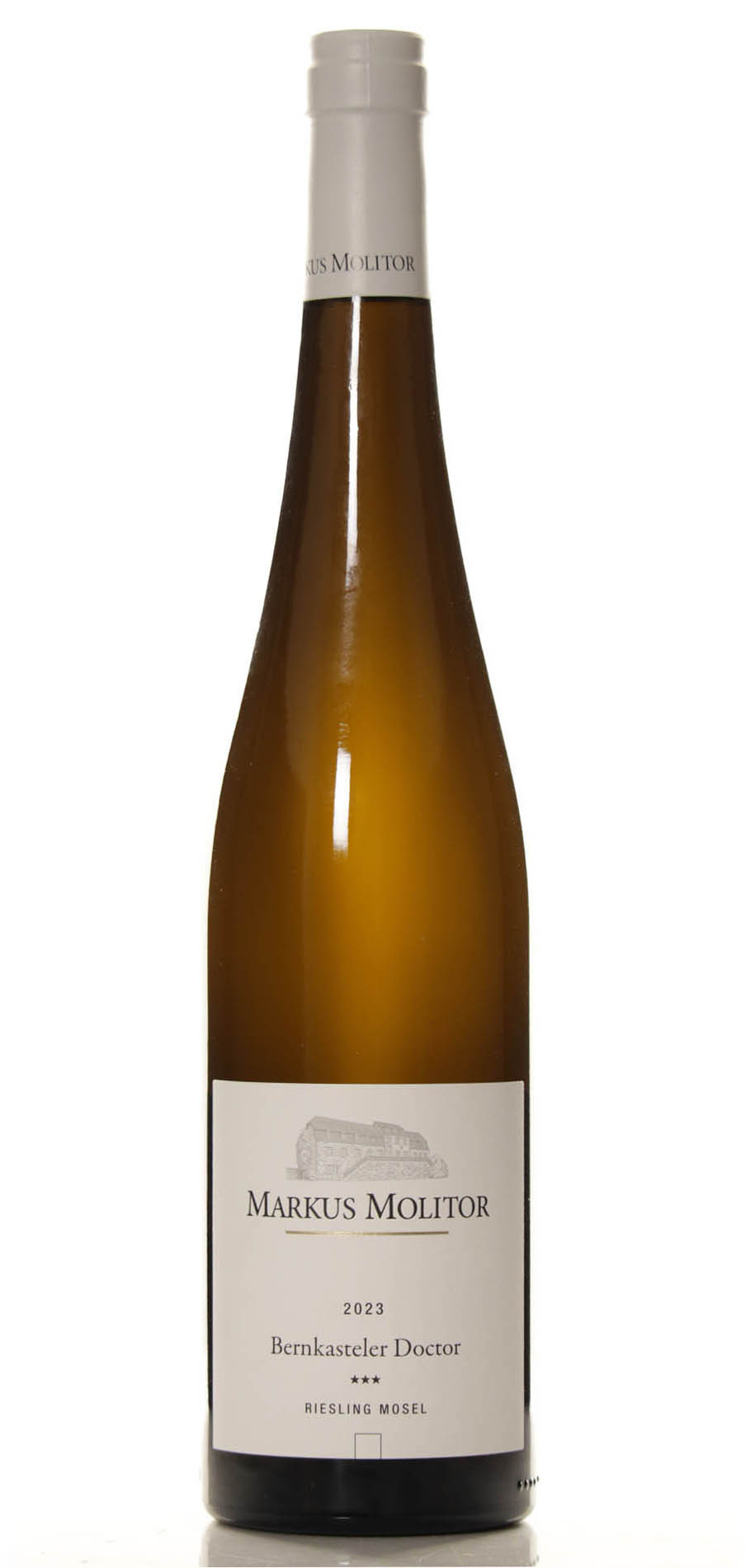
Markus Molitor Bernkasteler Doctor Weisse Kapsel Riesling Auslese Trocken 2023
Markus Molitor Bernkasteler Doctor Weisse Kapsel 2023 Riesling Auslese Trocken

€650,00 incl VAT: €786,50

Grape and style

The Mosel is riesling country par excellence. Here the grape yields wines that are low in alcohol yet rich in flavour: a bright, lively acidity, aromas of green apple, citrus, peach and blossom, and often a fine mineral character. Besides riesling, small amounts of Müller-Thurgau and Elbling are also grown.

The styles range from bone dry to rich and sweet. Thanks to the high acidity, a sweet Mosel stays fresh and balanced, and the wines do not easily become heavy or ponderous.

Location and soil

The Mosel winds through a deeply cut valley in western Germany, joined by its tributaries the Saar and the Ruwer. It is one of the coolest wine-growing regions in the country. The steep slopes along the river are therefore essential: they capture plenty of sunlight, and the water reflects heat and light onto the vines.

The soil consists largely of slate, a rock that absorbs heat during the day and releases it again at night. This gives the wines their characteristic minerality. The vineyards are so steep that most of the work is done by hand.

Classification and rules

German wine is classified according to the Prädikat system, which is based on the ripeness of the grapes at harvest. In ascending order: Kabinett, Spätlese, Auslese, Beerenauslese and Trockenbeerenauslese. Eiswein is a separate category, made from frozen grapes.

The Prädikat indicates ripeness, not automatically sweetness. A Kabinett is light and delicate, a Spätlese fuller, and an Auslese rich and concentrated. Whether the wine is dry or sweet can be read from terms such as trocken, feinherb or the sugar content. If you want to compare the wines of the Nahe, you will find a different soil and style there.
Ageing and serving

Mosel riesling is among the wines with the longest ageing potential. Good bottles gain in complexity for years and develop notes of honey, herbs and the familiar petrol-like aroma. Sweet Auslesen and richer wines can even age for several decades.

Serve the wine well chilled, at around 8 to 10 °C. Dry Mosel goes well with fish, shellfish and light dishes; wines with a little residual sugar are a classic partner for spicy Asian cuisine. Sweet Auslese combines well with fruit desserts or blue cheese. See also Nahe.

Producers in our range

These producers feature in our Mosel range: Egon Müller (Scharzhofberger and Le Gallais), Joh. Jos. Prüm, S.A. Prüm and Markus Molitor.

Vineyards on the label

Names on the labels in our range include Scharzhofberger, Wiltinger Braune Kupp, Wehlener Sonnenuhr, Graacher Himmelreich, Bernkasteler Lay and Bernkasteler Doctor, from Spätlese to Auslese Goldkapsel.

More from Germany

You will find more wines from Germany under Nahe.

News from Vineut

Sign up for the newsletter and stay up-to-date!