filter

Country

Region

Sub-region

Producer

Wine type

Volume

Rating

Vintage

Packaging

Price

Contact

Do you have questions or need advice? Get in touch with us directly:

Ask a question

Alsace

Alsace lies between the Vosges and the Rhine, along the German border. The Vosges hold back the rain, making it one of the driest wine regions of France.

Our range includes wines from Alsace by Trimbach. If you would like to explore France further, you will also find Languedoc-Roussillon, Loire and Jura in our range.

Read more

Grapes and style

Alsace is one of the few French regions where wine is mainly named after the grape. The four noble varieties are riesling, gewurztraminer, pinot gris and muscat; pinot blanc, sylvaner and pinot noir are also important. Riesling gives a taut, dry wine with citrus and stony minerality, gewurztraminer is aromatic with lychee and roses, and pinot gris is richer and fuller.

The wines are generally dry, although some types can have residual sugar. There is also crémant, sparkling wine made by the traditional method, as well as late-harvest and sweet wines.
Location and soil

The vineyards lie on the eastern foothills of the Vosges, along a narrow strip running from north to south. The mountains block much of the rain, making Alsace one of the drier and sunnier parts of France, with cool nights that preserve aromatics and acidity.

What stands out is the variation in soil over short distances: granite, limestone, marl, sandstone and volcanic rock all occur. Each subsoil gives the same grape a different expression, and it is the soil that underlies many of the differences between producers and villages.

Classification and rules

Alsace has three main appellations: Alsace for the basic wines, Alsace Grand Cru for wines from specially designated vineyards, and Crémant d’Alsace for sparkling wine. Grand cru wines are subject to stricter requirements on yield and grape variety, and the name of the vineyard appears on the label.

There are also two designations for late-harvest and sweet wine: Vendange Tardive for late-picked grapes, and Sélection de Grains Nobles for wines made from extra-ripe grapes, partly affected by noble rot. The wine is bottled in the characteristic slender flute bottle.

Ageing and serving

Dry Alsace wine is usually at its best after a few years, but Riesling from good grand cru vineyards can age for decades and then develops petrol and honey notes. Sweet Vendange Tardive and Sélection de Grains Nobles have a very long life. Decanting is rarely necessary.

Serve dry white wine at 8 to 10 °C and sweet wine at around 6 to 8 °C. The wine pairs well with choucroute, tarte flambée, fish, poultry and spicy Asian dishes. If you would like to compare Riesling from another region, take a look at Mosel.

Producer in our range

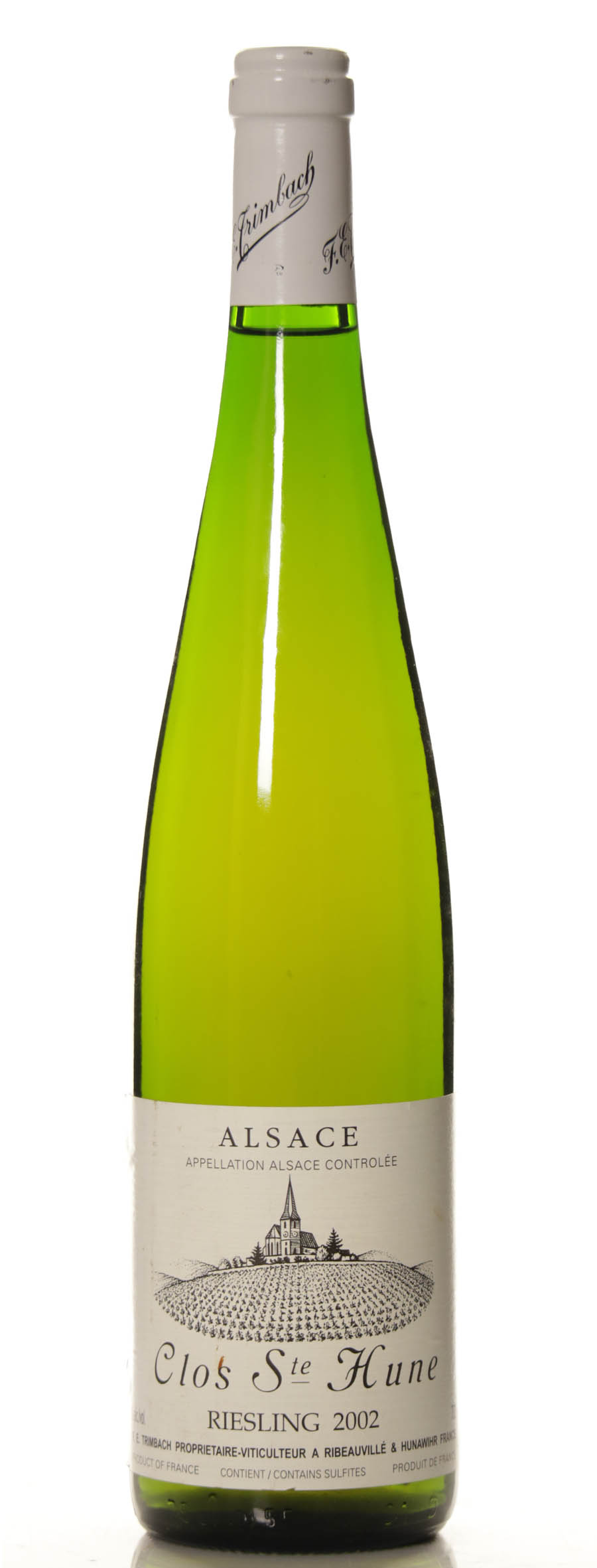
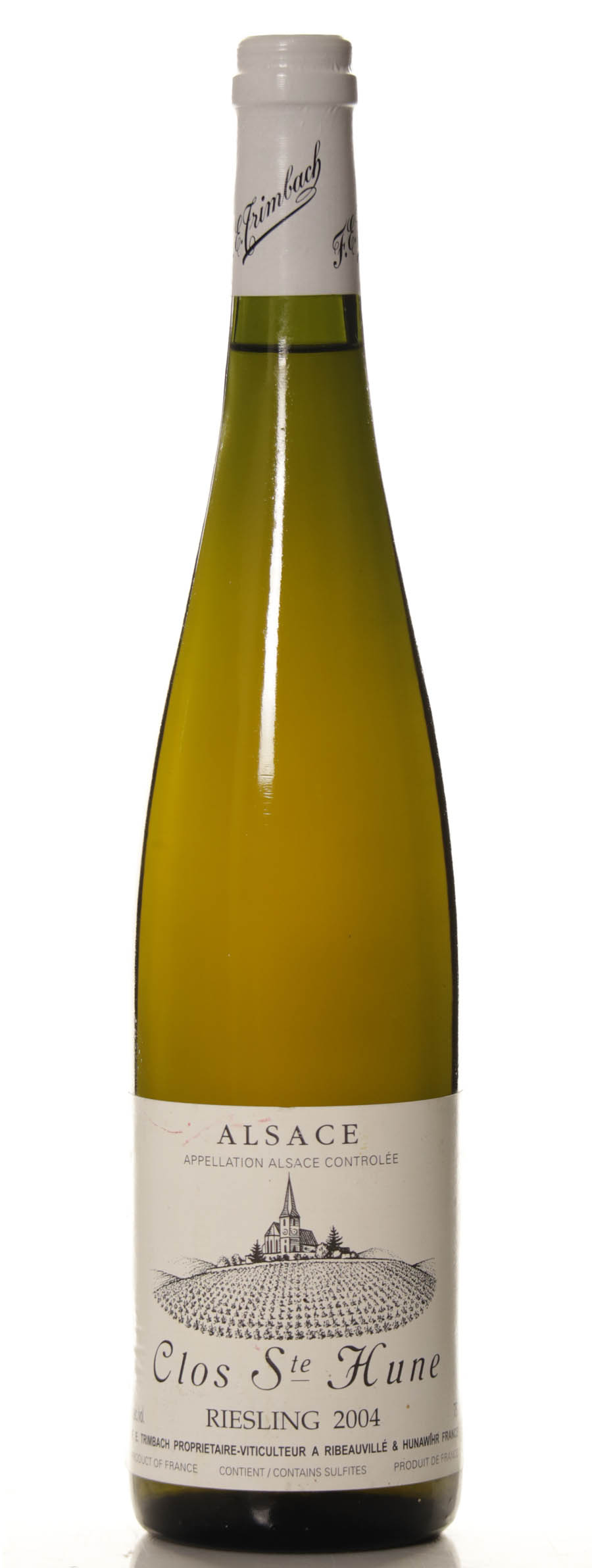
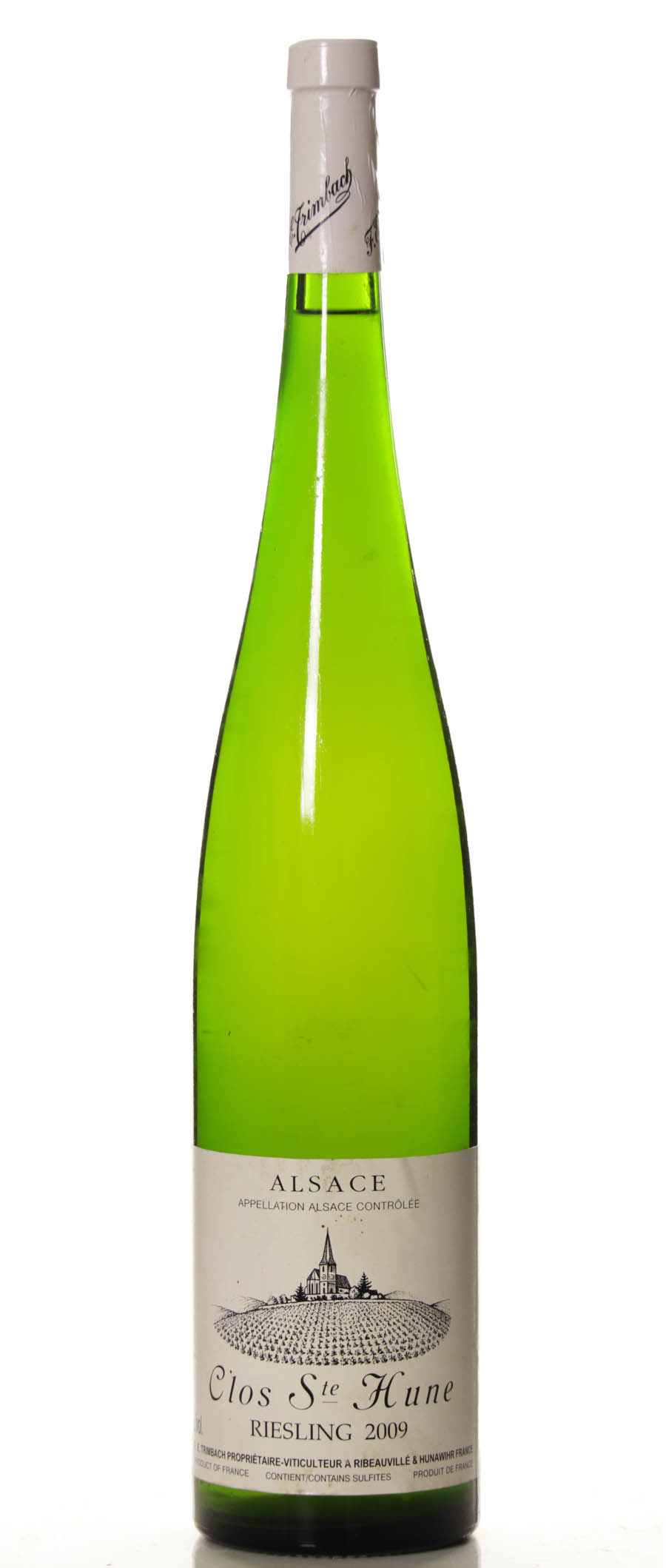
This producer features in our Alsace range: Trimbach (Riesling Clos Sainte-Hune).

More from France

You will find more wines from France under Languedoc-Roussillon, Loire, Jura and South West France.

News from Vineut

Sign up for the newsletter and stay up-to-date!