Country
Region
Sub-region
Producer
Wine type
Volume
Rating
Vintage
Packaging
Price
Contact
Ask a question
Saint-Émilion
Saint-Émilion lies on the right bank of the Dordogne, around the medieval town of the same name. Merlot and cabernet franc lead here, on limestone and gravel soils. The vineyards around Saint-Émilion have been a UNESCO World Heritage Site since 1999.
Our range includes wines from Saint-Émilion by producers including Cheval Blanc, Ausone, Angélus, Pavie, Figeac and Troplong Mondot. If you would like to explore Bordeaux further, you will also find Pauillac, Pomerol and Saint-Julien in our range.
Grapes and style
Saint-Émilion is merlot country. Most wines are made from merlot, supplemented with cabernet franc and sometimes a little cabernet sauvignon. This gives a red wine that is round and full, with a soft structure and ripe fruit.
Typical aromas are plum, cherry, chocolate, coffee and spice, with a hint of earth or truffle after years of ageing. Cabernet franc adds freshness and spiciness. The wines are generally more approachable than those of the left bank, but the best can still age for a very long time.
Location and soil
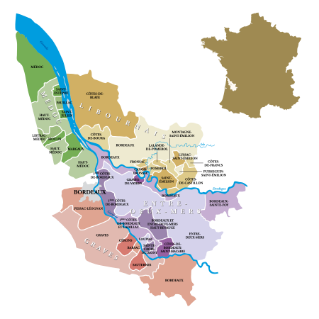
Saint-Émilion lies on the right bank of the Dordogne, around the medieval town that gives the appellation its name. The town and the surrounding vineyards are on UNESCO’s World Heritage List. The area consists of a limestone plateau, the slopes beneath it and a sandy plain along the river.
On the plateau and the slopes the soil is rich in limestone and clay, which provides structure and freshness. On the sandy soils the wine is lighter in style. On the east side of the town lie the vineyards with the greatest tendency towards elegance and depth, while the area in the west borders Pomerol.
Classification and rules
Saint-Émilion has a classification system of its own that differs from that of the left bank. The ranking into Grand Cru, Grand Cru Classé and Premier Grand Cru Classé is revised periodically, so estates can move up or down.
Note the difference between the appellation Saint-Émilion and Saint-Émilion Grand Cru. The latter is a separate appellation with stricter requirements on yield and ageing. The Premiers Grands Crus Classés form the highest level in the pyramid.
Ageing and serving
Saint-Émilion is often pleasant after just a few years, but the better wines hold up for years to decades. The character then becomes softer and more complex, with notes of dried fruit, tobacco and forest floor.
Serve at 16 to 18 °C. You can decant young wines an hour beforehand. The wine pairs well with poultry, roasts, mushrooms and cheese, and also with duck breast or rack of lamb.
Producers in our range
These producers feature in our Saint-Émilion range: Cheval Blanc, Ausone, Angélus, Pavie, Figeac, Clos Fourtet, Troplong Mondot, Canon, Canon-la-Gaffelière, Pavie Macquin, Pavie Decesse, Belair-Monange, Magdelaine, La Dominique, Soutard, Le Tertre Rôteboeuf, La Gaffelière, Larmande, Grand Mayne, Trotte Vieille, Fleur Cardinale, L'Arrosée, Villemaurine, Grand Corbin-Despagne, Les Grandes Murailles, Bellevue, Laroze, Fonroque, Cadet-Piola and La Tour Figeac.
Second wines
Our range also includes second wines, such as La Closerie de Fourtet from Clos Fourtet and Petit Figeac from Figeac.
More from Bordeaux
You will find more wines from Bordeaux under Pauillac, Pomerol, Saint-Julien, Margaux, Sauternes, Saint-Estèphe, Pessac-Léognan and Haut-Médoc.